Boston Dynamics
Context
A conversation with Claude Fable 5.1, 2026-10-28
Sources:
https://www.wbur.org/news/2026/10/23/boston-dynamics-employees-petition-dhs
https://www.bostonglobe.com/2026/10/23/business/ice-spot-boston-dynamics-sale-workers/
https://www.scrippsnews.com/investigations/ice-inc/new-records-detail-ices-plan-for-four-legged-robots-named-spot
https://www.boston.com/nes/local-news/2026/09/30/ice-settles-contract-to-buy-boston-dynamics-robots-for-1-3-million/
ICE Contract
A $1.3 million contract with ICE was settled in September for the sale of four robot dogs and other Spot technology, about 300 employees petitioned against it, and interim CEO Amanda McMaster wrote that after considering the petition, the company is standing by its decision. What grabbed me is the control structure they’re leaning on. The sale is routed through a partner, Boston Dynamics is providing ICE with its Spot robots through a third-party Connecticut company, Radeco, and the company’s position is that ICE is bound by its terms of service like any customer, with the enforcement being voiding the warranty, refusing all future software updates, terminating their license, taking any appropriate legal action available to us, and likely never selling to that customer again. So the entire safeguard is a detective control with after-the-fact remedies, applied to a federal agency, on a platform that ships with an open SDK. The package itself includes a five-foot arm attachment that will be able “to see on top of closets, bunk beds, and some crawl spaces,” which is a very specific use case to be describing for a tunnel-inspection robot. A 76-year-old protester outside the building called the whole thing naive, and whatever you think of the politics, she’s describing the controls gap exactly.
Boston Dynamics History
Boston Dynamics is a 34-year-old company that has been sold three times and only started selling products about six years ago, which explains a lot about the current moment.
It starts at MIT in the 1980s. Marc Raibert ran the Leg Laboratory, where the question was deliberately narrow: can a machine balance dynamically on legs the way animals do, rather than shuffling along statically like a walking toy. His one-legged hopping robot from the 80s is the ancestor of everything you've seen since.
Leg Laboratory
Raibert spun the lab out as Boston Dynamics in 1992, and for its first two decades it was essentially a research shop. The money came from DARPA and the military, and the famous early robot, BigDog in 2005, was explicitly a mule to carry gear for soldiers over terrain. The video of a guy kicking BigDog and it staggering and recovering is the first time most of the world saw them.
Big Dog
The military lineage is the thing the company has spent the last decade trying to put behind it, and it's why the ICE story lands the way it does. The Marines eventually passed on their robots because the gas engines were too loud for patrol.
Then the ownership carousel. Google bought them in 2013 during Andy Rubin's robotics buying spree, decided within a couple of years it didn't want to be the company whose terrifying robots went viral, and sold them to SoftBank in 2017. SoftBank is the era when the company pivoted from research to commercial product: Spot went on sale in 2019, Stretch the warehouse box-mover came after, and the dancing videos started, which were a very deliberate rebrand from "DARPA nightmare" to "delightful."
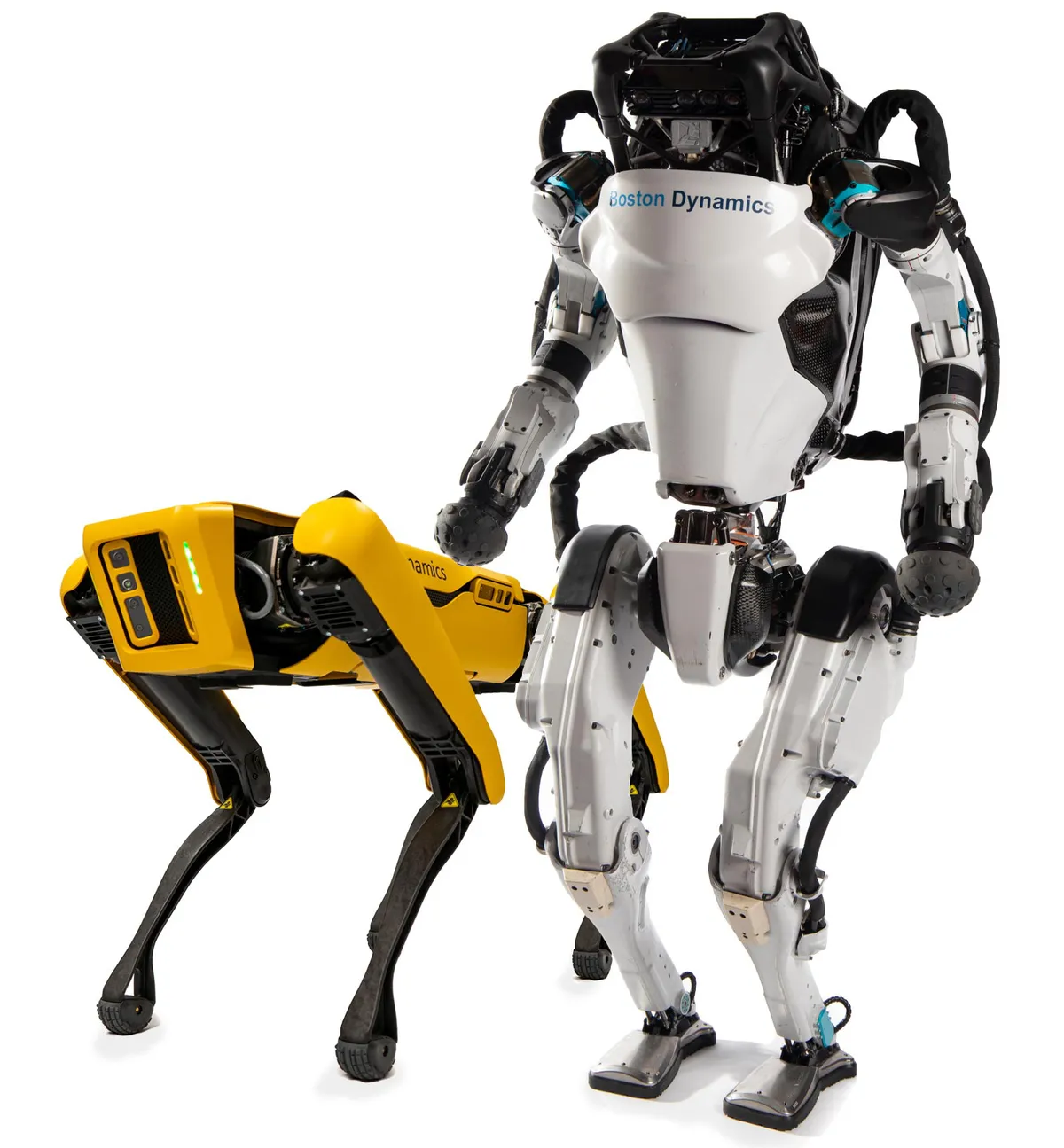
Hyundai took an 80% stake in 2020 for about $1.1 billion, and Hyundai is where they still sit. Raibert himself stepped away from running it years ago and now leads a separate AI research institute Hyundai funds. So the current leadership is a few generations removed from the founder and the lab culture.
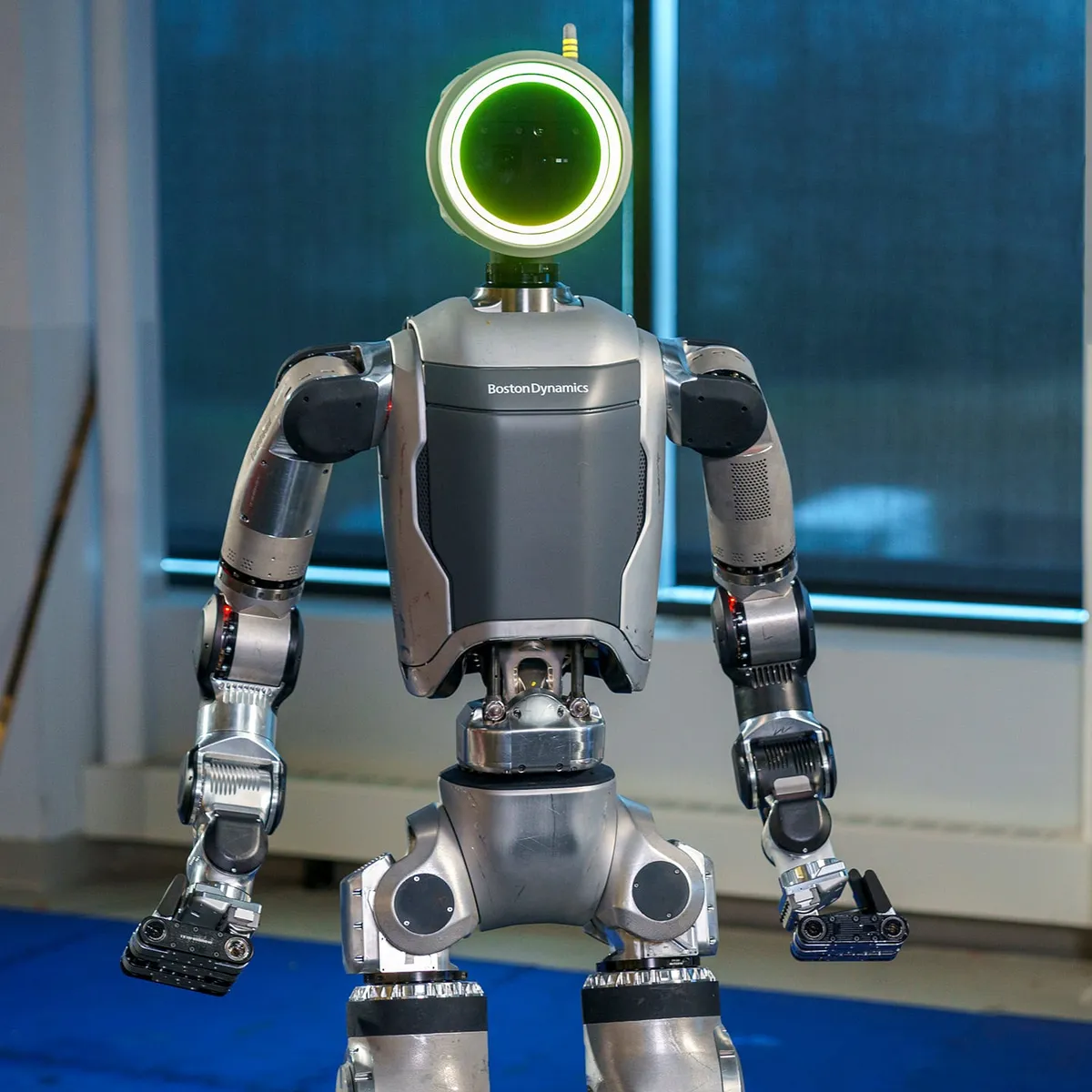
The other arc is Atlas, the humanoid. The hydraulic Atlas that did backflips and parkour was retired in 2024 and replaced with an all-electric version that moves in ways the old one couldn't, joints that rotate fully around, and that's the one Hyundai wants on factory floors. That's the real commercial bet now: Spot pays bills, Atlas is the future.
And the pattern worth noticing for this week's story is that they've been here before. The NYPD leased a Spot in 2020, the public hated the optics, and the department cancelled in 2021. A company then strapped a paintball gun to a Spot as a stunt, and someone else tried mounting a gun on a competitor's quadruped. That's what prompted the 2022 open letter where Boston Dynamics led five other companies in pledging not to weaponize their robots. So the terms-of-service posture they're citing with ICE was built as a response to embarrassment, which is exactly why it's a detective control. They've always been a company that makes the thing first and discovers the policy problem when a video goes viral.